‘She might not be Jamaican,’ says Jackie. ‘They’re both adopted. They’re not related, not like that, not by blood I mean.’
‘Oh, what’s that like?’ asks someone.
‘It’s like this,’ says Harriet, not looking up from her napkin folding.
Love and Happiness p.69
What is adoption like? I suspect there are as many different experiences as there are adoptees. I can only tell you about mine—the perspective of a 61-year-old, mixed-race adoptee who has found that time does not heal, that the experience of trans-racial adoption only grows more complicated as the decades whizz by.
I arrived at my adoptive home, ten days old, with little more than a few naive leaflets and a good-luck wave from the social worker. My well-meaning parents were left entirely to their own wit and wisdom. I was fortunate; they did as good a job as they could under circumstances in which their best efforts would never be enough.
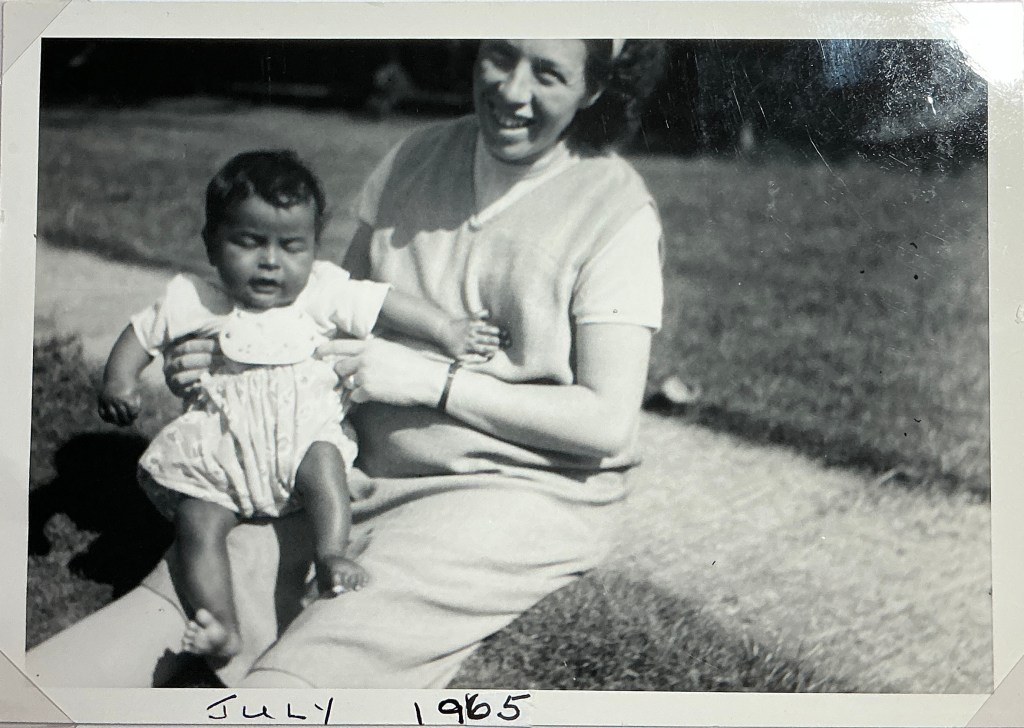

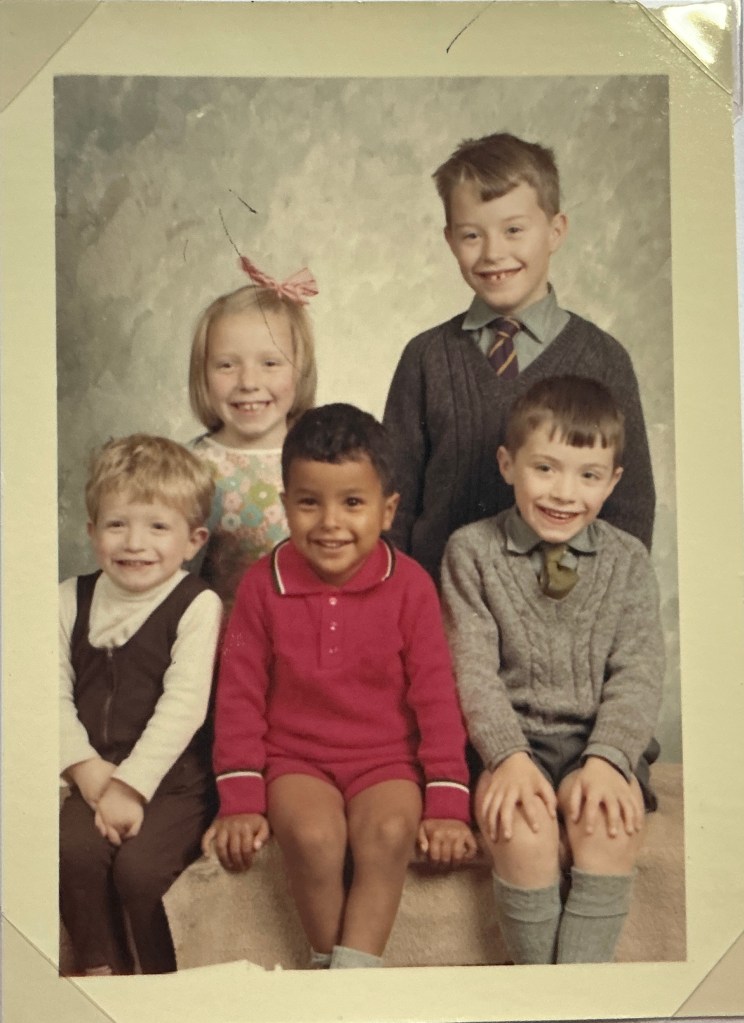
My parents’ valiant efforts could never be enough because I emerged into consciousness with a tragically resolved reality: given up by one family to be taken in by another. Rejection, abandonment, etched into my backstory before I could even speak. And this lifelong awareness of that initial abandonment indicated an unsteady, untrustworthy world and moulded a child who overcompensated, who required regular reassurances of love, loyalty, and praise.
I had older, and then younger siblings, and felt as loved as any of them. Adoption was spoken about and normalised in our everyday discourse. Growing up as a brown baby in a white family, there was no big reveal. You can’t hide that kind of truth. Yet, I can only surmise that the underlying trauma of being given away never really left my developing head-space.
I have never sought out my birthparents. I understand that knowing where I came from would fill a multitude of unresolved holes in my life, but I have simply never been brave enough to risk putting myself through that level of rejection for a second time.
The way I see it, I was left behind on a metaphorical platform while my family’s train departed the station. That was never okay with me, and I’m not sure what could be said now that would make me understand why it happened.
My sense of abandonment by my birth family is intensified by the social attitudes of 1964. It is impossible to discount the racial element of my instant rejection; a picture of a white family urgently divesting themselves of their daughter’s brown baby. Bastards!
This unavoidable racist narrative is made even more painful by the knowledge that white babies put up for adoption were considered premium, reserved for childless white couples. Black or brown kids, like myself, went to adopters who already had children, and were often offered in pairs. These are heavy, complicated realities to absorb.
Having my own children complicated these feelings further. Meeting my children; my first and only encounters with blood relatives; has made the very concept of adoption feel even more alien to me. Adoption feels like a Western-European cultural anomaly that I am still failing to get my head around. No resolution. No happy ending.
I wrote a novel, Love and Happiness, to explore these unresolvable shadows. It isn’t a safe story, because adoption isn’t a safe experience. Writing Harriet and Lucas’s adoption story didn’t serve to soothe my pain. It’s too late for that – hard knocks leave dents. So, Love and Happiness is an exploration of scenarios, of possibilities, a pacy, raw look at a search for belonging in a world that feels unsteady in its foundations and uncertain in the relationships it offers.
Love and Happiness is the story of two brown babies left to find their own way in a white world. Tracing their journey from juvenile fantasy to the adolescent dawn of an uncomfortable reality, and finally, to a more mature, but equally traumatic reflection.
If you have spent your life navigating the unresolvable holes left by the departure of your birth family, I would value your perspective in the comments. And how has your take on adoption shifted as the decades have whizzed by?
G.I. James – author: Love and Happiness
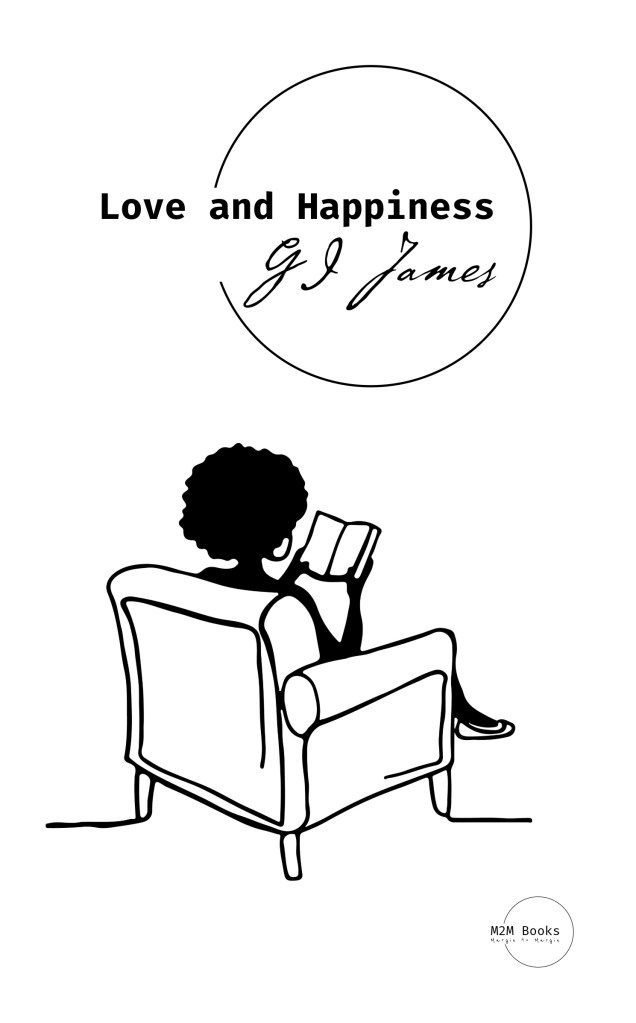
Love and Happiness by G.I. James is available in UK bookshops.
❗️Special Ebook Offer❗️Kindle edition £4.99 £1.99 – offer ends 14 January.

 Margin to Margin Books