
Here we go again. The internet ablaze with performative fury. The source of this latest fuss? The suggestion that Lupita Nyong’o has been cast as Helen of Troy in Christopher Nolan’s upcoming adaptation of The Odyssey. Predictably, press and social media platforms are awash with the rantings of fragile white people.

We have been here before – many times: when the BBC cast David Gyasi as Achilles in Troy: Fall of a City; when Halle Bailey was cast as Ariel; when Bridgerton reimagined the Regency; Doctor Who, of course; the perennial speculation about an incoming Black James Bond. The noise is always the same; tired and predictable arguments recycled by the usual suspects; levels of vitriol that are overt, hurtful, and increasingly extreme.
I want to propose a radical shift in how to engage with this divisive discourse. The debate about the skin colour of Helen of Troy (the Western canon’s ultimate signifier of beauty) is not a debate for Black and brown people. It is the ideal example of a conversation that whiteness needs to have with itself. For People of Colour, engaging in this exhausting, pointless nonsense is nothing but a distraction; a distraction that validates a premise that should be dismissed before wasting a single breath.
The Myth of Accuracy in a World of Monsters
Let me briefly address the surface-level argument, if only to dismantle it so we can move on to the more important message:
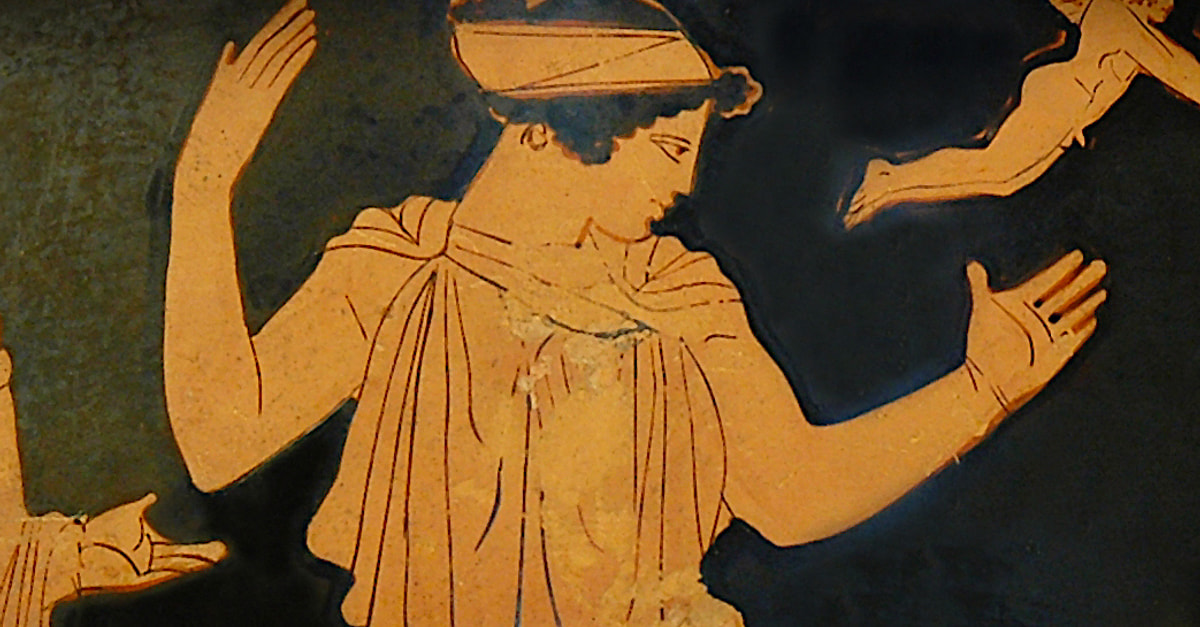
Detractors crying foul over a Black Helen often cloak their racism in the guise of intellectual rigour. They demand historical fidelity for a story involving a woman hatched from an egg by a swan-god, a ten-year siege interrupted by divine intervention, and a hero who battles a cyclops and navigates between six-headed monsters and gigantic whirlpools. Sensible people have long highlighted the absurdity of demanding rigid racial realism in mythology while at the same time suspending disbelief for magic, monsters, and divine intervention.


However, to point this out, or that Ancient Greek concepts of race do not map onto modern whiteness, is to lose the game before we have started. By responding with facts, we implicitly acknowledge that their objections are somehow rooted in logic. We kid ourselves that we may change minds if we just provide enough footnotes.
Minds won’t change. Because this ridiculous debate is not about accuracy nor history.
Helen and the Monopoly on Beauty
So, why is Helen of Troy such a flashpoint? Why does she provoke a fiercer reaction than a Black Zeus or a Black Achilles might? Because Helen is not just a character; she is a symbol. She is “the face that launched a thousand ships”. Helen of Troy represents the zenith of desirability, a woman worth the burning down of a whole world.
For centuries, Western culture has conflated ‘classical’ with ‘white’ and ‘beauty’ with ‘whiteness’. This Eurocentric standard of beauty relies on the assumption that the apex of human aesthetic value must look a certain way. To cast a Black woman as Helen is to disrupt the visual language of white supremacy at a most primal level. A casting that suggests beauty worth destroying civilisations for, could be a face that looks like Lupita Nyong’o.
Such a notion obviously sends a tremor through the foundations of whiteness. It triggers a deep-seated anxiety that their monopoly on beauty is being challenged. The outrage is nothing to do with preserving the integrity of Homer; it is about preserving the hierarchy of desire. If Helen can be Black, then whiteness is no longer the default setting for beauty.
This is why the debate is so visceral. We are witnessing an internal crisis of confidence within whiteness itself. What we hear is the sound of a cultural hegemon realising it can no longer exclusively cast itself as the protagonist, the hero, and the prize.
The Exhaustion of Engagement
For People of Colour, particularly women, stepping into this arena is an act of emotional self-harm. To debate your right to be seen as beautiful, or even to simply exist in the realm of fantasy and myth, is a degrading and pointless exercise.
When we engage with these bad-faith actors, we are essentially pleading a case to a jury that has already decided we are guilty of intrusion. We are forced to perform our humanity, to cite historical precedents, to explain that People of Colour are both architects of, and players within, the human story. And for what? To be met with gaslighting and racial abuse?
The process is exhausting. It drains the spirit. It saps energy that could be used for creation, for joy, for community, and pours it into a bottomless pit of internet futility. Every time a Person of Colour explains why representation matters, or why Greek antiquity was not a monolith of white skin, we are doing unpaid labour for a demographic that refuses to learn. But more than that, we are granting the detractors power. We are treating their playground tantrums as legitimate discourse.
A Conversation Whiteness Must Have with Itself
This is why I argue that we should step back. Racism is not our mess to clean up. The anxiety that white audiences feel when they see a Black Helen is their problem to solve. It is a symptom of their own limited imagination and insecurities.
Whiteness needs to ask itself: Why does this bother me? Why do I feel erased by the presence of others? Why is my enjoyment of a story contingent on the exclusion of Black people? These are uncomfortable questions that require introspection. They require white people to confront the way they have been conditioned to see themselves as the default. When we intervene, when we try to hold their hands through this process or shout them down with logic, we interrupt the necessary work they need to do on their own.
Let white allies in the independent press compose the opinion pieces dismantling their community’s racism. Let white historians correct the record on Bronze Age demographics. Let white parents explain to their children why people are angry about a movie casting. It is for whiteness to police its own boundaries and confront its own demons.
The Power of Opting Out
So, what should People of Colour do instead? We should opt out.
Opting out does not mean silence; it means refusing to play by their rules. It means refusing to center our reaction on their outrage. Instead of defending Lupita Nyong’o’s right to play Helen, we should simply celebrate a casting that we can recognise is meaningful.
We should be wholly focussed on: Is the script good? Is the cinematography compelling? Does the performance move us? We should treat the casting of a Black woman as an entirely positive occurrence, because to us, it is. We know we exist. We know we are beautiful. We know we belong in every story.
By refusing to engage with the controversy, we deny them oxygen. We delegitimise the debate by treating it as unworthy of our attention – with a collective shrug of the shoulders. Imagine if we simply bought our tickets, enjoyed the film, and let the detractors scream into the void. There is a profound power in indifference. It signals that our validity is not up for negotiation. It signals that we are done with pleading for permission to be seen.
Let them have their own debate. Let them write their bilious posts and boycott the art. Let them mourn the loss of a world where they were the only ones who mattered. It is a painful process for them, evidently. But it is not our burden to bear.
Our job is to preserve our peace, to nurture our own creativity, and to support art that reflects the world as we know it to be: vast, diverse, and full of colour. The next time you see the timeline filling up with rage about the skin colour of a mythological queen, keep scrolling. Go outside. Read a book. Create something.
Let whiteness talk to itself. We have better things to do.
I am curious to hear your reflections on this suggested shift in perspective. Have you already found power in the collective shrug, or do you feel we have a duty to tackle these controversies differently? If you are a Person of Colour, how are you choosing to protect your wellbeing during these predictable cycles of digital noise? Share your thoughts below.
Gareth James | Chief Reader | M2M Books
 Margin to Margin Books