At Margin to Margin Books, we’ve always believed that the most compelling stories are not found in the well-trodden centre, but at the edges; in the margins where identity, culture, and creativity collide. As a newly established independent press based in the heart of Mid Wales, our mission is to provide a permanent home for these voices, ensuring they are heard on their own terms.
M2M Books do not believe in tokenistic diversity calendars or trauma-mining narratives. We believe in excellent literature. Today, we are looking for partners in the literary community to help us share that vision.
To celebrate our inaugural titles, we are opening up a number of review slots for reviewers, bloggers, Bookstagrammers, and BookTokers who share our passion for diverse voices and literary excellence.
Debut Titles
We are seeking reviews for:
Love and Happiness by G.I. James: A punchy, sophisticated work of literary fiction. It deconstructs the complexities of the adoption experience and the lifelong quest for a sense of belonging. It is a debut that refuses to pull its punches.
I Zig and I Zag: A vibrant poetry anthology that brings together a chorus of multi-community voices. A collection that is a testament to the zigzag nature of life on the margins—resilient, unpredictable, and beautiful.
Join Us
If you have an established platform and a dedicated following of readers who crave stories that move beyond the mainstream, we would love to collaborate with you.
We are offering a limited number of physical review copies for those who appreciate the aesthetic, as well as digital ARCs for our international friends or those who prefer to read on the go.
How to Request a Copy:
Please send an email to info@m2mbooks.com with the subject line “Review Request.” Please tell us:
Which title(s) you are interested in.
A link to your blog or social media platform.
Your preferred format (Physical or Digital).
As an independent press, we rely on the passion of the literary community to help these stories travel. We can hardly wait to hear what you think of the work.
I am famously agnostic about Christmas; never been one for tinsel and forced seasonal sentimentality. Not enticed by New Year’s Eve; the noise and the performative countdowns; seen it all before. But I still get super-excited by the first working day of each New Year – a motivational springboard of intent. Happy New Year!
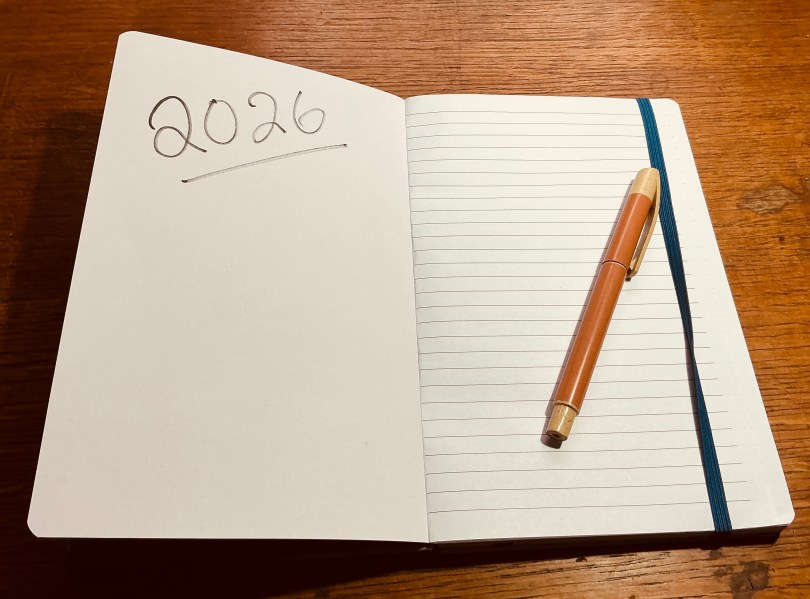
So, while most of the rest of the world remains in recovery mode, I have already flipped open this new year like the first page of a brand new notebook (so fresh and so clean clean). Energised by the potential of many unknowable narratives that will be etched into reality over the coming twelve months.
A massive drawer marked “January”, for the past few months, has been a convenient vessel to shove many arduous tasks into. Ambitious ideas, complex manuscripts, and every “we’ll get to that” email, hidden away for a later date. Today (cos it feels like a Monday), that drawer has been tipped onto my desk, set out neatly, ready to be engaged with.
📚 Looking Back – Moving Forward
The final months of 2025 were a whirlwind of activity for M2M Books:
• The Launch: We brought into the world our first multi-community poetry anthology, I Zig and I Zagby Masaka Madeda alongside other diverse poets, and debut novel, Love and Happiness by G.I. James; a pacy narrative exploring adoption and identity that has already begun to resonate.
• The Transition: We bade a fond farewell to Irie’s Bar; a space that fuelled our early energy; and have transitioned our operations to Taliesin. This move represents a shift into a more focused, dedicated environment where we can nurture the next wave of M2M Books’ authors and titles.
• Our Digital Home: We revamped our publishing website m2mbooks.com. We stripped away our necessarily hurried first attempt to create a boutique space that better reflects the quality of our authors.
💪🏾 Hopes for 2026: Publishing beyond the diversity Calendar
Throughout 2026, the M2M Books’ mission is to encourage writers from diverse backgrounds to move beyond the diversity calendar; to compose texts for their own communities; to resist defaulting into explanation and performative suffering for largely disinterested mainstream audiences.
This year is about building permanent internal libraries for a range of marginalised communities. We want to publish more books that uplift communities and refuse to fit into any predictable mainstream box.
The desk is set, the notebook is open, the pen is poised. Let’s get to work.
✍🏾 Join the Journey
If you have a manuscript that belongs on our desk – a story, poetry, or nonfiction written for a marginalised community – our submission window is always open.
– a Call to Action for Authors and Illustrators ✍🏾
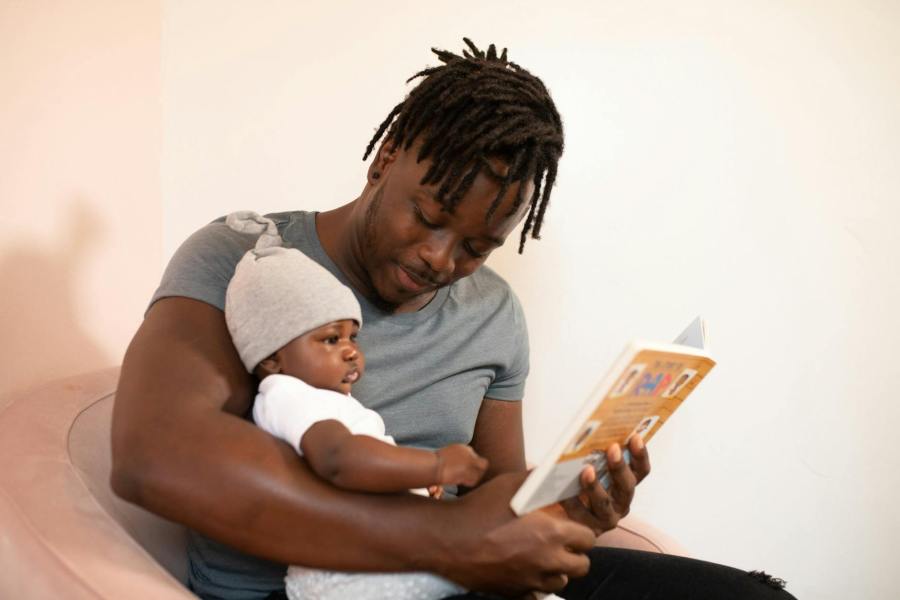
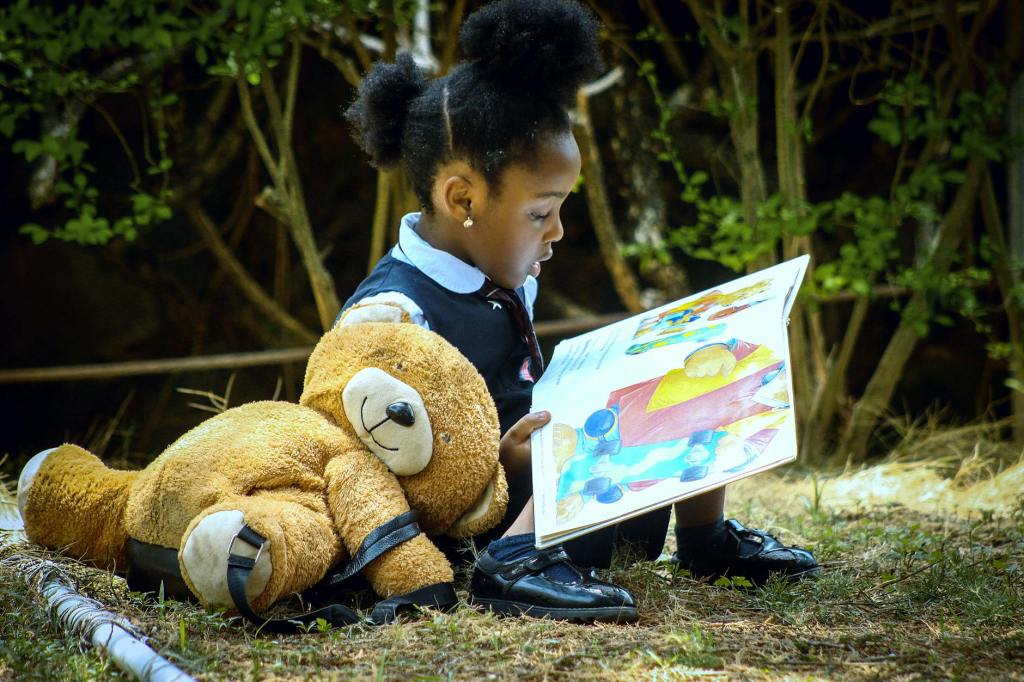
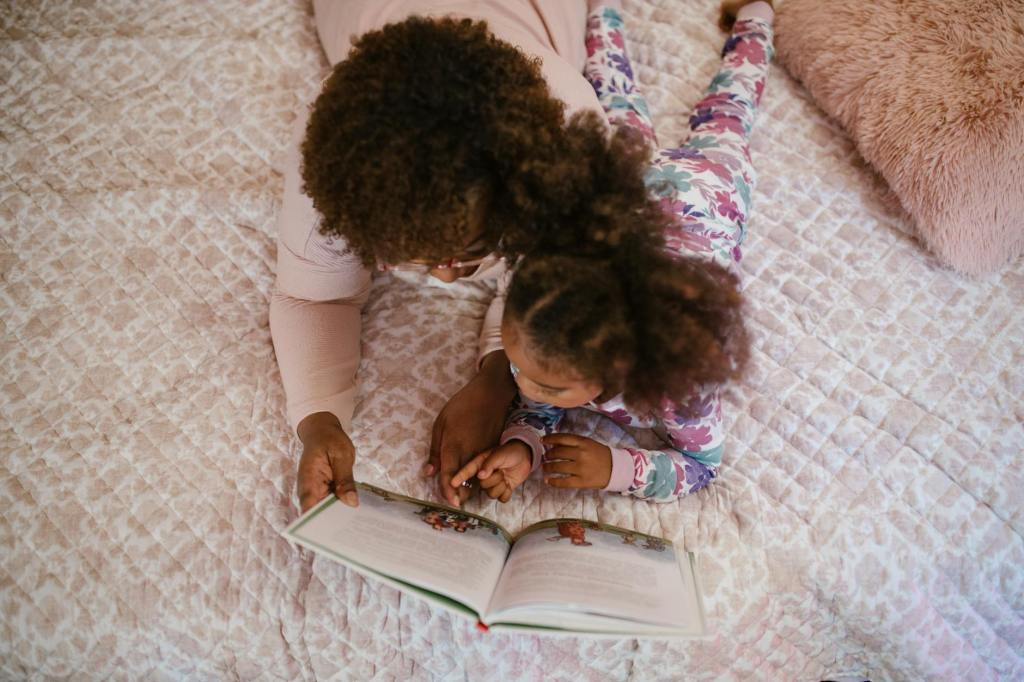
A priority for M2M Books is to publish an increasing number of baby and toddler books, picture books, and fiction featuring characters and storylines relatable to children, from toddlers to teens, who find themselves excluded in British children’s books by their ethnicity, culture, neurodivergence, or disability.
M2M Books are treating this early-reading audience as a priority because we understand that the next generation of diverse authors, editors, proofreaders, illustrators, librarians, retailers, reviewers, literary agents, printers, and publishers, can only emerge from a generation of children that love books. And for diverse children to learn to love books, we need them to become immersed in a steady stream of engaging stories that relate to their lived experiences and include characters that represent their perspectives.
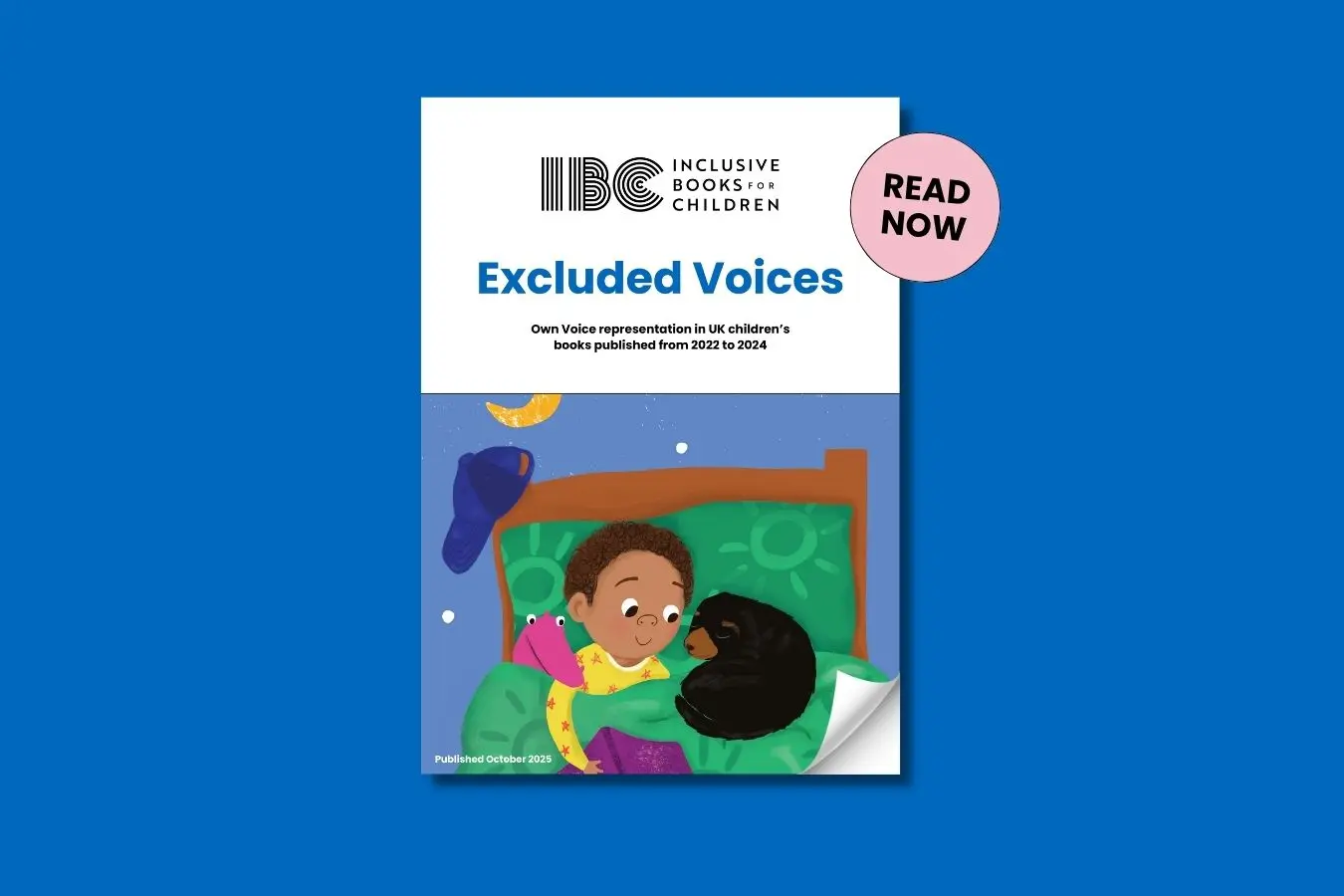
If any of us required further motivation to give this initiative the full beans, the recently published 2025 Excluded Voices Report provides stark evidence of the importance of succeeding in our mission.
As a UK publisher, it is also a priority that M2M Books publish titles written and illustrated by UK-based authors and UK-based artists who share the same marginalised identity as their main characters (own voice). For when a character’s identity is central to a story but the creators are not from that community, more often than not, there are problematic aspects to the depiction (ask Jamie Oliver!). For example, tokenistic representation such as a main character wearing a hearing aid as a superficial nod towards disability. Or, in a Peter and Paul story, just colouring Paul brown and adding a predictable subplot about the evils of racism. We agree with the report’s conclusion that ‘however well researched a work might be, the lack of lived experience shows. Own Voice stories generally bring depth that such books entirely lack’.
So, if you are a UK-based author or illustrator from a marginalised community, with an idea for a baby and toddler book, picture book, children’s fiction, or another style of book appealing to children aged 1-9 from the marginalised community you identify with, we would love to see your idea.
British own voice representation in children’s literature is extra crucial right now because the Excluded Voices report highlights a worrying upward trend in UK publishers commissioning children’s books from overseas. So, instead of investing in British talent to diversify their portfolios, in order to plug the diversity gap, mainstream UK publishers are favouring international talent for British editions. For example, repackaging African-American titles as tick-boxing substitutes for commissioning UK-based creatives from African or Afro-Caribbean heritages.
Main-character representation in baby and toddler books is extremely low across all marginalised groups, representing just 2.8% of output.
Black main characters in baby and toddler books dropped 21.5% between 2023 and 2024, now featuring in a measly 1.9% of the entire published output.
In 2024, no baby and toddler books offered neurodivergent or disabled representation at main-character level and just two picture books were published with neurodivergent main characters.
Only two baby and toddler books were by British own voice authors.
‘My heart sank when I read about the limited representation in Baby and Toddler books. I can’t express how important this category is. The warmth of hearing my own toddler excitedly exclaim, “that’s me” as we read together, I understand how impactful this is for early reading experiences. The absence of neurodivergent or disabled main characters highlights a persistent gap. Structural barriers in publishing must not excuse the lack of investment in inclusive early years content. Prioritising Own Voice creators is essential if we are to build meaningful representation from the very beginning.’
The Black Nursery Manager, Liz Pemberton
In children’s fiction, the output of books with Black main characters was down 50% between 2023 and 2024 (George Floyd and BLM trend publishing).
Despite 2.6% of England’s school and nursery population having East and South East Asian (ESEA) heritage, during 2024, only 0.8% of children’s books published for one-to-nine-year-olds featured ESEA main characters.
Representation of Middle Eastern or North African characters was even more pitiful. And nearly half of the output in this category was based on war or refugee narratives.
Disabled representation at main-character level has entirely faltered with numbers of published books too small to be meaningful in terms of discerning any real trend.
So, tokenistic, trend-driven, grant-securing, one-hit-wonder publishing of books for marginalised children is the depressing norm in the UK and the situation is getting worse. Our job, therefore, is to buck this trend and to publish the books our diverse children will want to read, to invest in and nurture UK-based authors and illustrators from diverse backgrounds, and to demonstrate that publishing for children from minority communities is a viable and worthwhile strategy for mainstream publishers. M2M Books are working right now to publish our first picture book around Easter 2026. And we want to publish more.
Share your own experiences in our comments. Get in touch with your ideas.
M2M Books believe that creative talent is everywhere – it’s only the opportunity that’s missing.
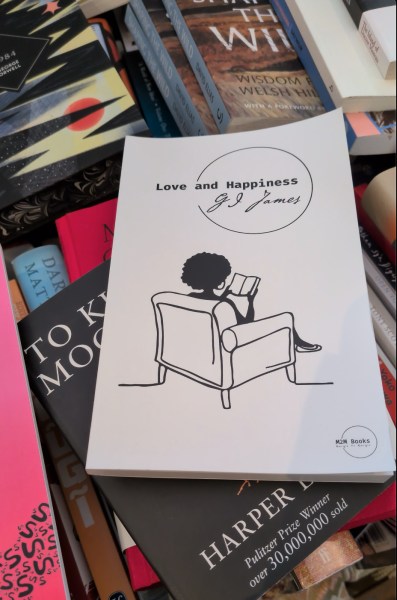
We spotted within Ystwyth Books’ social media that G.I. James’s debut novel, Love and Happiness, was among this month’s selection of ‘New Books’. Ystwyth Books is apparently ‘the best bookshop in Wales’ – we think that stocking Love and Happiness can only bolster this claim. 📚
As this is the first of our offerings (that we know of) that is available in an actual real genuine bookshop – can’t lie, properly exciting – definitely a significant and exciting milestone in the evolution of M2M Books. Obviously, I parked my cool self, sprinted to the top end of town and snuck an inspiring peep. 🏃🏾
Both of M2M Books’ debut titles are available to order from Ystwyth Books and all other UK bookshops (plus Amazon). If you are overseas (or prefer reading Ebooks), for now, you can grab yourself the Kindle editions by following these links:
If you spot either of our books out there in the real world, please post to your social media and tag M2M Books or email us at info@m2mbooks.com – we cannot get enough of this sort of excitement! Also, cannot wait to read your reviews!
About Love and Happiness 📖
Don’t mess with Harri! This pacy debut novel by G.I. James revolves around the formidable Harriet Bush, a mixed-race adoptee growing up in the North West of England. As a child, with important truths concealed by adoption laws, Harri can only imagine where she came from – as an adult, she gets to fill in some crucial pieces.
Love and Happiness is a raw and poignant exploration of the destructive nature of adoption, the relentless pursuit of identity, and the struggle to find a place in a world that feels untrustworthy and unwelcoming. Will Harriet be able to reclaim her sense of self and find the affirming love she so desperately seeks, or will the shadows of her past consume her?


 Margin to Margin Books